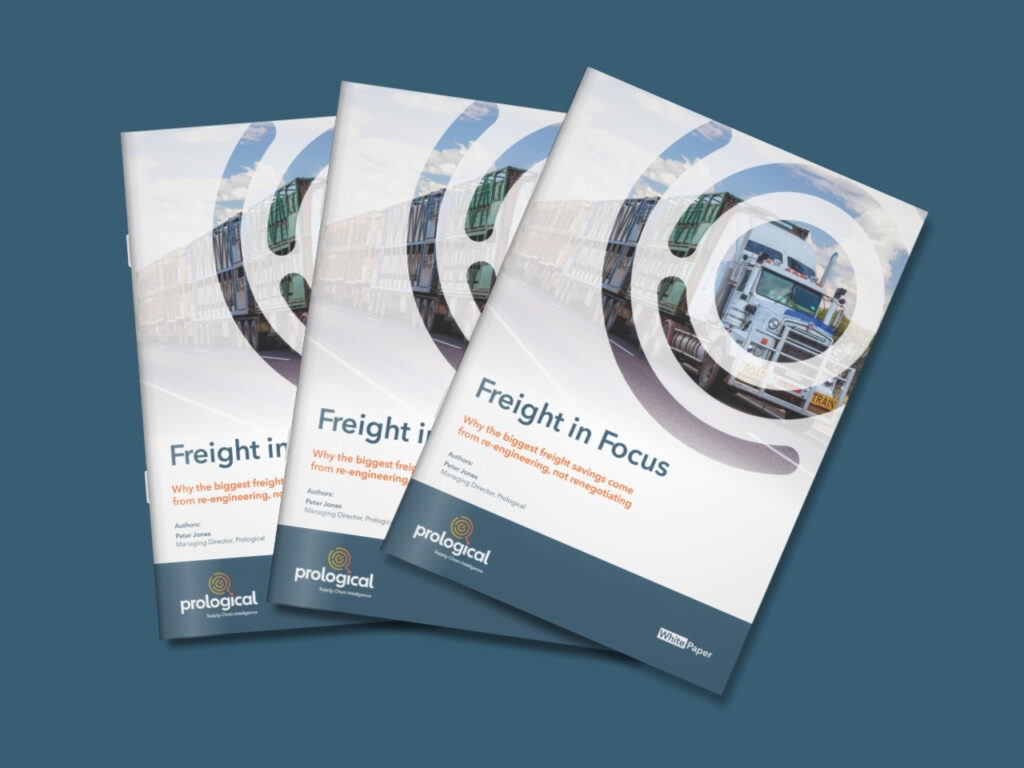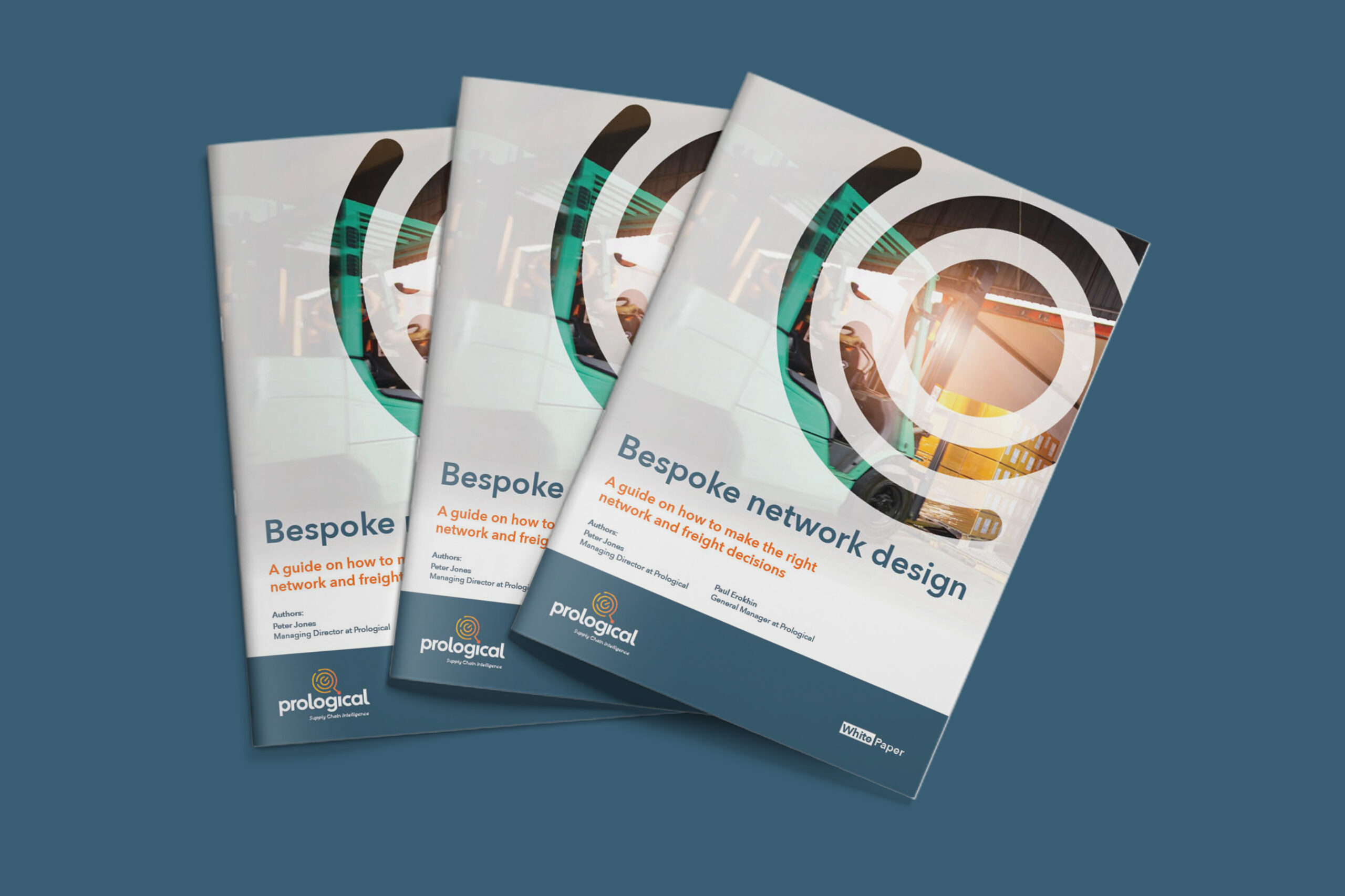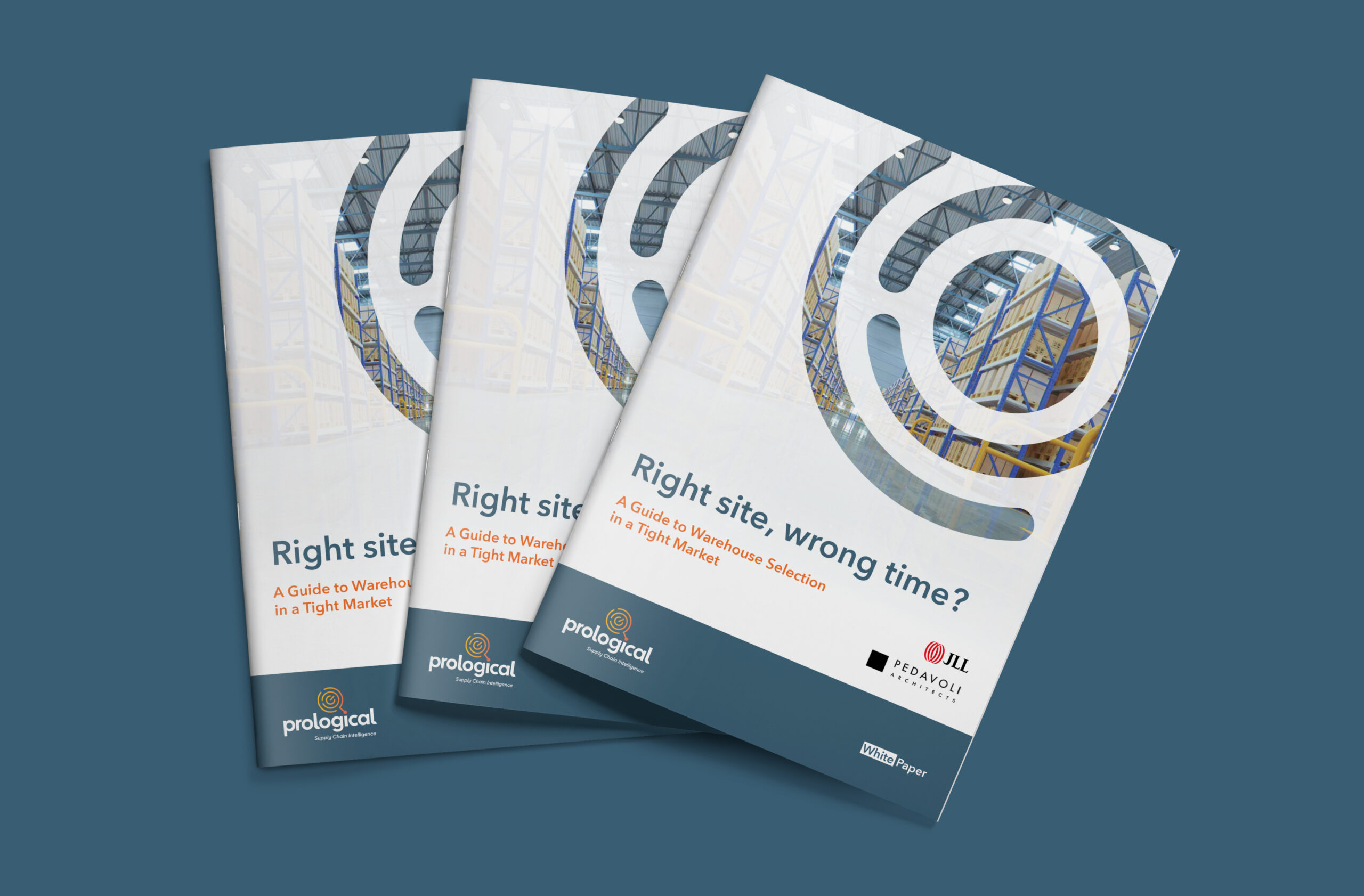
Freight cost reviews have traditionally centred on rate negotiation. This approach can produce measurable savings — typically in the order of 5-7% — but it has a structural limit. Australia’s road transport sector has experienced sustained contraction, with financially stressed carriers exiting the market at an increasing rate; continued downward pressure on price reinforces that contraction and, over time, puts the buyer’s own service levels at risk.
Fuel cost adds a further layer of complexity. Diesel price shocks — such as the one triggered by the February 2026 closure of the Strait of Hormuz — periodically expose the limitations of a flat fuel surcharge, which prices a short metro delivery the same as a long-haul interstate leg despite very different underlying fuel cost shares.
The larger, more durable savings come from treating freight as an engineering problem rather than a procurement exercise — re-designing the network, the equipment, and the carrier relationships themselves, rather than negotiating the rate card alone.
What’s inside
- Why rate negotiation has a structural ceiling, and what continued price pressure does to carrier viability and service levels
- The framework Prological applies to evaluate every freight decision, from carrier contracts through to network design
- How to segment freight, match equipment to product, and structure multi-carrier strategies for durable cost reduction
- A more equitable approach to fuel surcharges, calculated by task type rather than a single flat rate
- How carrier market contraction and fuel price volatility should inform freight strategy more broadly
Key Figures
5-7%
typical savings achieved through rate-negotiation-led freight purchasing
25%
savings available through operational re-engineering of the freight network
~10%
of Australian road transport businesses exited the market in the 12 months to November 2025 — around 40% more than the prior 12-month period